NYC Doggies
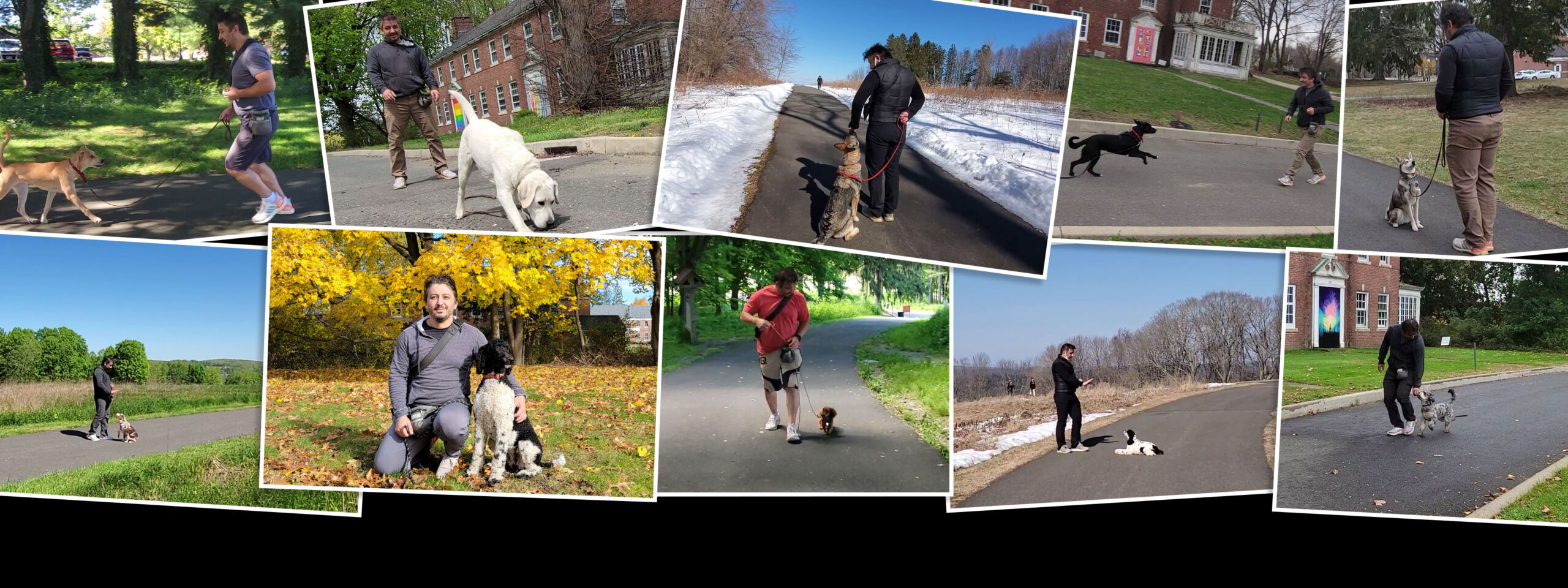

Our Approach To Obedience Training
Obedience training is the process through which a dog learns to perform a specific action in response to a particular cue (i.e., verbal command and/or hand sign). To better understand our obedience program, and the process through which a dog in training acquires new skills, we break it down into the following three parts:
Interestingly, this process mirrors human learning. Initially, we grasp a concept (teaching phase). Next, we experiment with it in diverse situations to deepen our understanding (proofing phase). Finally, we consistently and effortlessly apply that concept in our profession, becoming proficient (maintenance phase).
We teach all obedience commands using positive reinforcement, and we proof the commands using clear communication. We then help the dog’s parents put into practice everything we have taught their dog, and integrate those commands into daily routines.
Consider This
Rethink obedience training
Many new dog parents harbor the misconception that training their dog once will solve all their present and future problems, but that’s seldom the case. Dogs are living creatures with complex brains and dynamic wants and needs, that continuously adapt to an ever-changing environment by altering their behavior… sometimes in undesirable ways.
Consequently, parents must either acquire some basic training skills or perpetually rely on professional trainers. Many dog parents often resort to isolating their dogs as a way to avoid issues, but that’s a strategy that invariably has adverse effects on a dog’s behavior.
This doesn’t mean parents need to become dog training experts. Rather, they simply have to become proficient at understanding and managing the unique personality of their individual dog. It’s not a quick and easy process, but with the right guidance from a skilled dog trainer, mastering this should be straightforward.
Private Sessions &
Zoom Consultations
Dogs respond most effectively to training when it’s conducted by individuals with whom they share a friendly, trust-based connection.
Since Ovidiu won’t have the opportunity to establish this type of connection with the dogs that are not in board-training, his primary emphasis will be on instructing the dog’s parent in the appropriate methods and techniques.